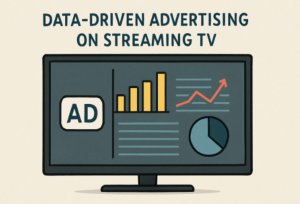
How Data Drives Smarter Streaming TV Buys

Key Takeaways
- Data analytics are revolutionizing streaming TV advertising by enabling precise audience targeting.
- Advertisers can optimize campaigns through real-time insights and performance metrics.
- Understanding viewer behavior and preferences leads to more effective and efficient ad placements.
Table of Contents
- Introduction
- The Rise of Streaming TV
- Leveraging Data for Targeted Advertising
- Real-Time Insights and Campaign Optimization
- Understanding Viewer Behavior
- Challenges in Data-Driven Advertising
- Future Trends in Streaming TV Advertising
- Conclusion
Introduction
Television advertising is experiencing a watershed moment, with the rapid migration from traditional TV models to digital-first streaming platforms. Advertisers are now faced with unprecedented opportunities to elevate their strategies and ROI through advanced data-driven methods. Central to this marketing revolution is the evolution of streaming TV advertising, where data and analytics act as catalysts for more brilliant and efficient buys as ad spend continues to shift towards programmatic and data-powered approaches, leading to industry solutions—such as Simpli.fi Streaming TV solutions—help marketers seamlessly navigate the complexities of omnichannel targeting and performance measurement.
With consumers flocking to on-demand content and personalized experiences, the need for precision, relevance, and agility has never been greater. By leveraging sophisticated analytics tools, brands and agencies can not only track and measure campaign outcomes, but also refine their targeting to reach the right audiences at the right time. The data-driven transformation of streaming TV is thus empowering advertisers to get more from every impression, making every dollar spent work harder and smarter.
The Rise of Streaming TV
The ascendancy of streaming TV is a defining trend in modern media consumption. Over 60% of total TV viewing time is now devoted to digital streaming, outpacing linear cable and broadcast as the nation’s new go-to for entertainment. This paradigm shift underscores an urgent call for advertisers to rethink legacy strategies that relied heavily on generalized demographics and fixed programming slots.
Streaming has democratized content, giving users greater control over what, when, and how they watch. This on-demand model is fundamentally changing both viewership behavior and advertising potential, offering direct insights into engagement rates, viewing preferences, and even moment-by-moment attention metrics. As the streaming ecosystem expands with platforms like Netflix, Hulu, and Disney+, so too does the advertising potential for brands willing to harness its granular data layer.
To effectively capture this growing and highly engaged audience, advertisers must turn to innovative products and partners that specialize in streaming channels. Adopting advanced measurement standards and leveraging real-time data have become imperatives for staying relevant in an increasingly competitive market. As Forbes outlines, sophisticated attribution and closed-loop measurement are now setting the gold standard for accountable, high-impact TV buys.
Leveraging Data for Targeted Advertising
Traditional TV advertising relied on broad demographics and guesswork—today’s streaming TV landscape demands precision. Advanced analytics can unlock rich insights into viewer behavior, enabling brands to segment their audiences according to nuanced interests and preferences. Instead of casting a wide net, marketers can now personalize content and offers, increasing both engagement rates and campaign efficiency.
Advertisers can utilize a combination of first-party data, third-party partnerships, and streaming viewership data to tailor their messaging to specific segments, such as genre-specific fans, cord-cutters, or high-frequency streamers. This granular targeting not only reduces wasted ad spend but also creates more relevant and memorable ad experiences for viewers. As a result, streaming TV campaigns can deliver more substantial returns on investment, measured not only by reach but also by actual conversions and revenue growth.
Real-Time Insights and Campaign Optimization
One of the most significant benefits of data-driven streaming TV advertising is the shift from retrospective measurement to dynamic, real-time optimization. Campaign managers can monitor viewership, engagement rates, frequency, and completion stats in near real-time, making it possible to pivot strategies with speed and precision. For example, if certain creative elements underperform with a segment, advertisers can reallocate spend or swap content mid-flight to boost results.
Unlike traditional TV, where ad effectiveness could take weeks or months to assess, streaming TV provides immediate feedback loops. This empowers marketers to make data-informed decisions, stay agile, and maximize the impact of every impression served. According to a New York Times report, this agility has made programmatic streaming TV buys a top choice for brands seeking to control and optimize every aspect of their campaigns.
Understanding Viewer Behavior
Viewer data extends far beyond basic demographics—today’s analytics tools can assess not only what content is being watched, but also how, when, and on what devices. These insights reveal strategic opportunities for advertisers to align campaigns with consumption trends and moment-based contexts. For example, families with children are drawn to evergreen programming such as “CoComelon” or “Bluey,” with repeat viewing patterns strengthening brand recall and loyalty.
Digging deeper, data scientists can identify high-value audience segments who exhibit strong affinities to particular genres, times of day, or interactive ad features. Advertisers can then sequence and personalize messages to maximize relevance and resonance, whether it’s during a binge-watching session or a live event stream. This heightened understanding of behavior ultimately closes the loop between ad delivery and real-world outcomes, making streaming TV one of the most accountable channels in digital marketing today.
Challenges in Data-Driven Advertising
Despite its many advantages, the data-driven approach to streaming TV advertising isn’t without challenges. Privacy remains at the forefront, with consumers and regulators demanding greater transparency and control over how personal information is collected and used. Complying with evolving data regulations, such as those outlined in GDPR and CCPA, has created new hurdles for brands and agencies alike.
The enormous volume of available data can also be overwhelming. Extracting actionable insights requires not only sophisticated analytics platforms but also skilled data analysts who can translate complex information into informed marketing decisions. Fragmentation across platforms, measurement standards, and walled gardens further complicates the task of building cohesive, cross-channel narratives. Marketers must be diligent about partnering with providers who prioritize data integrity, security, and compliance at every step.
Future Trends in Streaming TV Advertising
The future of streaming TV advertising is set to be shaped by advances in artificial intelligence and automation. AI and machine learning models are increasingly adept at identifying audience patterns, forecasting behavior, and enabling hyper-personalization at scale. Programmatic buying—already widely adopted in digital advertising—is quickly gaining traction in connected TV (CTV), simplifying the process of reaching precise audiences across fragmented platforms.
Addressable TV is another area poised for breakthrough growth. By delivering different ads to various households watching the same program, addressable technology can unlock untapped audiences and minimize wasted impressions. Recent studies underline a growth opportunity for advertisers, who risk missing millions of consumers by underutilizing these cutting-edge tools. As brands grow more familiar with the capabilities of programmatic and addressable TV, expect to see a sharp uptick in validation, experimentation, and innovation across the space.
Conclusion
The transformation of television advertising by data-driven streaming platforms represents a foundational shift in the way brands connect with audiences. By embracing analytics, real-time optimization, and emerging technologies, marketers can deliver more precise, relevant, and performant campaigns than ever before. As streaming TV continues its meteoric rise, those who prioritize agility and data intelligence will be best positioned to drive more brilliant buys, maximize ROI, and stay ahead in a rapidly evolving media landscape.