Fun Ways to Support Math and STEM Learning at Home
Key Takeaways
- Integrating math and STEM into daily activities makes learning natural and fun.
- Hands-on projects and games can significantly boost engagement and understanding.
- Utilizing online resources and apps can provide additional support and variety.
Table of Contents
- Incorporate Math into Daily Routines
- Engage in Hands-On STEM Projects
- Utilize Educational Apps and Online Resources
- Create a Math-Friendly Environment
- Encourage Exploration and Questioning
- Participate in Community STEM Events
- Conclusion
Engaging children in math and STEM (Science, Technology, Engineering, and Mathematics) activities at home can be both rewarding and enjoyable. By blending creative play with structured learning, parents can help kids discover that these subjects are not just schoolwork but exciting tools for solving real-world problems. Simple strategies, such as exploring math board games for home and classroom, can make learning interactive and lay the foundation for a lifelong love of STEM.
Transforming the home into an engaging environment where questions are welcomed and ideas are shared helps children find purpose and excitement in studying math and science. Playful methods, hands-on experiments, and digital games can all help make abstract concepts approachable. With a few mindful changes to daily routines or the learning space itself, any family can boost their child’s math and STEM confidence. STEM learning at home does not rely on expensive equipment or specialized knowledge. Everyday activities like cooking, shopping, or solving puzzles can offer valuable opportunities to practice important math skills, such as measurement, organization, and logical thinking. When families are actively involved in the learning process, children develop critical problem-solving skills and resilience that will serve them far beyond the classroom. Parents often find that as they encourage exploration and curiosity, their children become more motivated and persistent with learning. Modeling a positive attitude towards trying, failing, and questioning can help youngsters see mistakes as opportunities for growth. Support and encouragement, rather than pressure, are key to nurturing a positive mindset around math and science.
Incorporate Math into Daily Routines
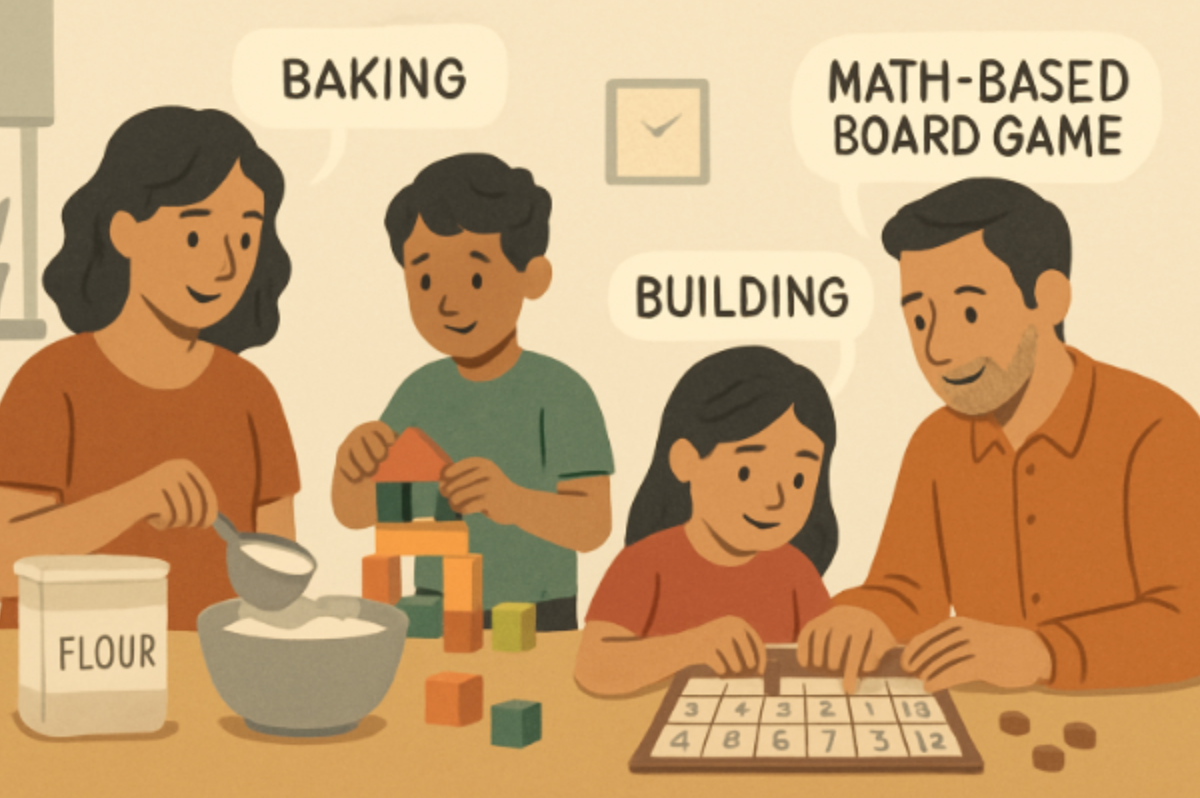
Math skills can develop naturally when they are woven into day-to-day activities. Cooking provides an excellent chance to talk about measurements, ratios, and division as kids help measure ingredients or convert units. Grocery shopping presents occasions to discuss budgeting and compare prices, making abstract math concepts feel practical and relatable. Counting steps on a walk, sorting objects by size or color, or tallying up points in family games can all reinforce basic math skills in a low-pressure setting.
Leveraging these everyday moments turns math from a subject into a life skill. Even subtle activities, like letting kids estimate how long daily chores will take or figuring out how to divide treats equally, reinforcz both numeracy and logical thinking.
Engage in Hands-On STEM Projects
Hands-on projects add a creative dimension to STEM learning. Children can try building simple bridges from household materials to learn about weight, structure, and engineering principles. Kitchen science experiments, such as making homemade volcanoes with baking soda and vinegar, show chemistry in action. Constructing paper airplanes, exploring magnets, or growing a windowsill garden can all spark curiosity and help children see scientific principles at work.
These projects allow kids to ask questions, make predictions, and see firsthand how science works. Not only do they gain a deeper understanding of the concepts, but they also develop perseverance through trial and error. Incorporating STEM activities during playtime builds confidence and encourages children to become active participants in their own learning journey.
Utilize Educational Apps and Online Resources
Technology has made STEM learning more accessible than ever before. Educational apps introduce kids to mathematical ideas and coding concepts through interactive stories and games. Tools like GeoGebra and math puzzle apps make abstract ideas visual and hands-on, which can be especially helpful for children who learn best through auditory or visual learning.
Resources such as Common Sense Media’s guide to math games for kids offer parents recommendations for high-quality, kid-friendly learning platforms. Many of these tools are suitable for a range of ages and abilities, allowing children to advance at their own pace while parents track progress and celebrate achievements.
Create a Math-Friendly Environment
Creating a dedicated learning area equipped with math games, puzzles, and books signals to kids that math is valued and enjoyable. This space does not require expensive materials. Simple resources like tangrams, number cards, building blocks, or logic puzzles can provide hours of learning.
Having these resources readily accessible encourages children to use them during downtime, reinforcing that math and STEM are for everyone, not just those labeled as “gifted.” Regular exposure cultivates comfort and skills, even when children are not explicitly working on homework. The environment can also be enhanced with colorful math posters or STEM-themed art, which serves as another conversation starter about shapes, patterns, and numbers.
Encourage Exploration and Questioning
Open-ended exploration builds curiosity and resilience in young learners. Parents can foster this by asking questions like, “What do you think will happen if we…?” or “Why does this work this way?” Exploring answers together, searching for explanations, or conducting small experiments helps children become independent thinkers.
Encouraging children to research answers, record observations, and develop unique solutions makes the learning process more engaging. Rather than aiming for quick right answers, this approach focuses on developing critical thinking and a willingness to tackle new problems, traits essential for long-term STEM success.
Participate in Community STEM Events
Community STEM events, such as science fairs, math nights, or local robotics workshops, expose children to a wider array of ideas and experiences. Meeting professionals in STEM fields or collaborating with peers on exciting challenges broadens their understanding of what math and science can offer as lifelong pursuits.
Checking with local libraries, museums, or schools can help families discover enriching events in their area. Involvement in these community events often leads to greater inspiration and a stronger sense of belonging among budding scientists and mathematicians.
Conclusion
Fostering math and STEM learning at home hinges less on parental expertise and more on enthusiasm, encouragement, and a willingness to try new things alongside your child. Incorporating fun activities, such as games and experiments, utilizing technology, and engaging in local events can transform learning into a shared adventure. Creating a supportive environment and fostering curiosity help children develop skills that benefit them in school and throughout their lives.